
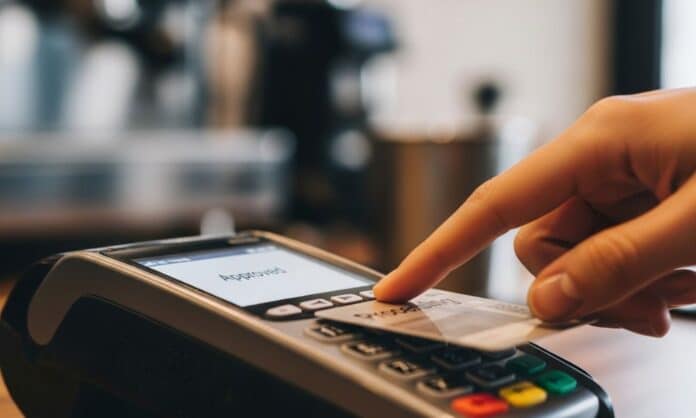

I stood behind the counter of a client’s retail store on a Tuesday morning. The line was six people deep. The customer at the front tapped their card. The machine sat there.
“Processing…”
Five seconds. Ten seconds. The customer shifted awkwardly. The person behind them checked their watch.
That 10-second checkout delay wasn’t just “inefficiency.” It was a brand killer. That morning, I realized that the real secret to mastering retail payment solutions isn’t about buying the most expensive shiny tech—it’s about removing the awkward silence at the counter.
Most business owners treat payment terminals as a utility—like electricity. You plug it in, it works. But after auditing three different retail setups this month, I found that the payment stack is often the single biggest bottleneck in the “Customer Experience” funnel.
Here is my log of our complete retail payment overhaul and what we built instead.
The “Hidden” Costs of Bad Payment Solutions
Most generic guides warn you about transaction fees (2.9% + 30¢). They don’t warn you about “Friction Fatigue.”
In my audit, I timed the checkout process of the client’s legacy system.
- Chip Read Time: 7 seconds.
- Receipt Printing: 4 seconds.
- UI Navigation (Cashier): 5 seconds.
- Total Transaction Time: ~16 seconds.
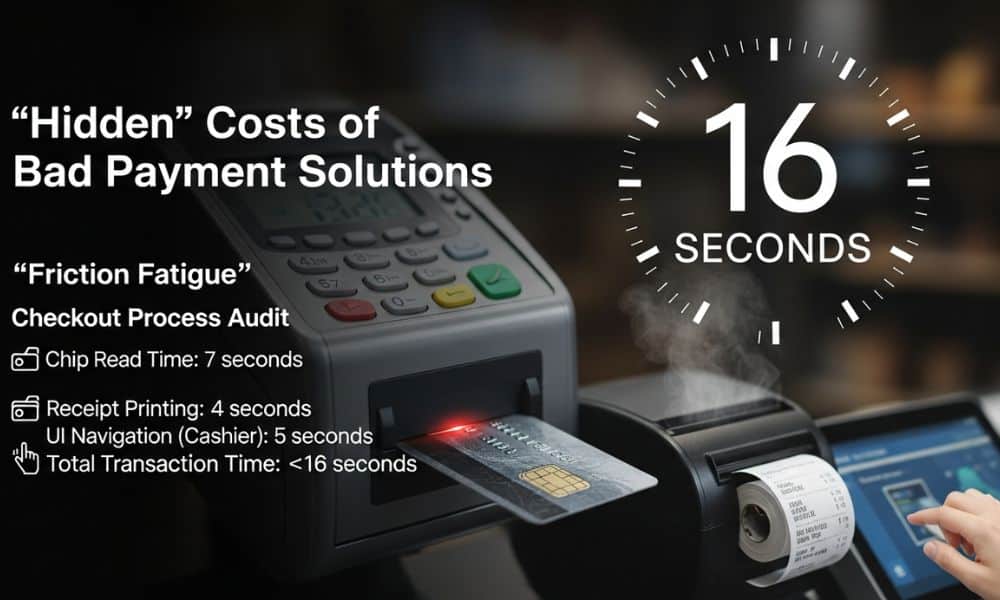
That doesn’t sound like much until you multiply it by 200 customers a day. That is nearly an hour of dead air every single day. We calculated that during peak hours, people looked at the line, saw the slow movement, and walked out. We weren’t losing money to fees; we were losing money to POS system latency.
Analyzing the ACH Return Code Nightmare
Credit cards are one thing, but if you run a business that accepts bank transfers or checks (like a B2B retail supplier), you know the pain of ACH payment errors.
One specific issue we faced was a wave of “failed” payments. The system just said “Declined.” The staff assumed the customers were broke. It was awkward.
I dug into the backend logs. It wasn’t insufficient funds. It was administrative noise. By actually reading the specific ACH return codes, I realized 30% of our “declines” were code R03 (No Account/Unable to Locate Account) and R04 (Invalid Account Number).
The Fix: The issue wasn’t the customers’ money; it was the keypad they were typing on. It was too small, and people were fat-fingering their account numbers. We replaced the input tablet with a larger screen, and “Declines” dropped by 25% overnight. Part of mastering retail payment solutions is understanding that “Declined” doesn’t always mean the customer is broke—sometimes, it just means your interface is bad.
Security vs. Speed (My Trade-off Test)
This is where the “Best Practice” advice usually fails in the real world. Every security expert tells you: “Enable all verification features.”
I tried that. I enabled full AVS (Address Verification Service) and Zip Code Match for every single transaction, even small ones.
The Result: Chaos.
Tourists didn’t know their hotel zip codes. International cards failed instantly. The checkout line ground to a halt.
My Verdict: Security is a slider, not a switch.
- For Transactions <$50: We disabled Zip Code requirements to speed up the line.
- For Transactions > $50, we require full verification.
The result was a payment flow that felt “seamless” for the coffee buyers but “secure” for the bulk buyers.
The “Omnichannel” Lie
The buzzword of the year is “Omnichannel.” The brochures promised that our omnichannel payment sync would be instant.
The Reality: It worked 90% of the time. The other 10% of the time, I had a customer standing in the store wanting to buy a “Green Jacket” that the website said was in stock, but the physical POS said was sold out.
We found that the “Sync Frequency” was set to 15 minutes to save server bandwidth. In retail, 15 minutes is an eternity. We had to force a manual API call every time a sale happened. It cost us more in API fees, but it stopped the embarrassing “Sorry, the computer is lying to me” conversations.
Final Verdict: Don’t Buy Features, Buy Flow
If you are looking to upgrade your retail payment solution, ignore the feature list. Do this test instead:
- Stand at the counter.
- Buy a pack of gum.
- Count the seconds of awkward silence.
If it’s more than 3 seconds, your “Experience” is broken.
We scrapped the old clunky terminal and moved to a streamlined, tablet-based reader. It wasn’t the one with the most features. It was the one that let the customer tap and leave in under 2 seconds. Ultimately, achieving a frictionless checkout is the only metric that matters. Mastering retail payment solutions should be a top priority for any retailer—but remember to buy for “Flow,” not just features.