
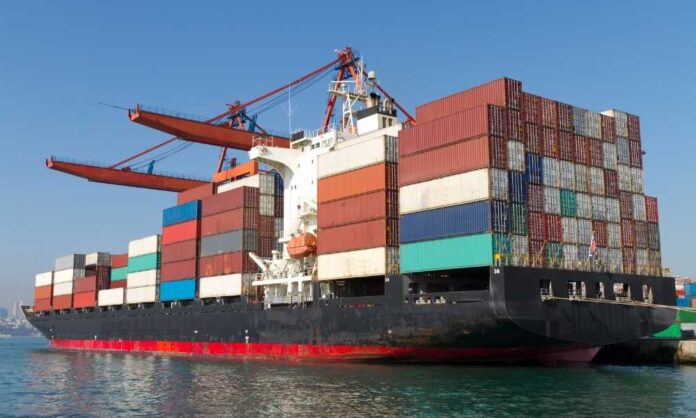

In 2025, when global logistics triangulate from container shipping, the container shipping trackers themselves have become indispensable. For every expansion of international trade, forwarders need to ensure that the goods move to the right place, at the right time, and in the right way. The technology that undergirds container tracking has grown apace and even anticipatively with the burgeoning global supply chain. This piece probes the latest advancements in the things that are now called “container shipping trackers,” as well as the tracking techniques, tools, and benefits that come with them.
What Is a Container Shipping Tracker?
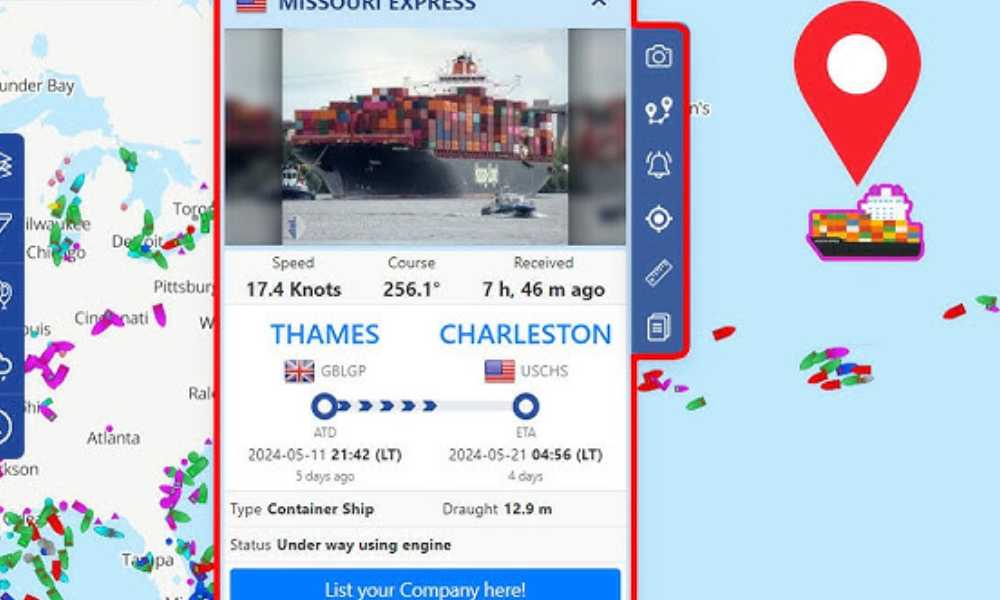
A “container shipping tracker” is a tool or software that enables users to track the real-time location and status of shipping containers worldwide. These trackers provide updates on the container’s position, its estimated arrival time, and potential delays, allowing logistics companies to monitor their shipments at all times. This software also delivers critical information such as container condition, temperature, and even its weight, depending upon the tracking system in use.
How Container Shipping Trackers Work
Track containers using a mix of GPS, IoT (Internet of Things) sensors, and data synchronization systems. These are usually integrated into container management systems, which provide the users with real-time updates through a web-based interface or app. The container is equipped with sensors or GPS devices that collect data and send it to the tracking system.
Tracking Techniques
1. GPS Tracking
The method with the most widespread adoption—GPS tracking—is now installed in containers, providing accurate location data. Installed on a container, the GPS receiver tells you where that container is in almost real time. This does not directly help you figure out where in the world the container is going, but it does help you monitor whether it is moving and in what direction. You can also use the same data to figure out whether it is traveling across the sea or the land.
2. Radio Frequency Identification (RFID)
Containers can be scanned as they pass certain checkpoints owing to RFID technology. Tagging containers with RFID chips makes it quite simple for logistics companies to scan these items and keep track of them. This method offers highly accurate tracking data and has applications in inventory management.
3. IoT Sensors
Current shipping containers have advanced even further, now integrating IoT sensors that monitor much more than mere location. These sensors can keep an eye on temperature, humidity, shock, and even tilt, making sure that sensitive shipments like electronics or perishables are handled with the utmost care right up until the moment they’re taken out of the container.
Based on these and other parameters, IoT-equipped containers can also estimate the remaining useful life of their contents. Naturally, that’s invaluable information not just for the shipping concerns themselves but also for the not-insignificant number of countries, states, and municipalities that might be interested in the contents for tax or public health purposes.
4. Tracking the Satellite
In remote places where conventional GPS might be poor or nonexistent, satellite tracking is used. Satellite technology assures that containers can still be tracked anywhere on the globe, no matter their precise location.
Best Container Shipping Tracking Tools for 2025
Several tools are available on today’s market that offer containers tracking with advanced features. Of these, some of the most notable and advanced are:
Container tracking software with advanced features for container tracking.
- Shipthis: Best for automating freight forwarding processes.
- FreightPath: Ideal for small to mid-sized carriers.
- Vizion API: Known for seamless API integrations.
- FourKites: Offers predictive analytics for better shipment management.
- Gnosis Freight: Focuses on synchronizing data across various platforms.
The latest tracking techniques, like IoT and GPS, are used in these tools to provide businesses with current and accurate tracking data.
Benefits of Container Shipping Trackers
1. Immediate Location Monitoring and Openness
A major benefit of container shipping trackers is real-time monitoring of shipments. This enhances supply chain transparency and reduces uncertainty, which in turn improves customer trust.
2. Enhanced Efficiency
Software that tracks deliveries gives immediate notice of any delays or route changes. By being informed in real time, logistics managers can take corrective actions to avoid further delays and keep the operation running smoothly.
3. Improved Decision-making
Companies can make better decisions about their inventories, shipment priorities, and resource allocations when they have access to real-time data. The quality of those decisions—informed, timely, and strategic—has a direct bearing on the company’s bottom line.
4. Heightened Protection
Numerous tracking devices provide such features as geo-fencing, which guarantees that containers are transported only within authorized areas. Alerts are set off when a container goes off-course or is delayed, thus ameliorating security.
5. Improved Client Encounter
Because companies are able to follow their containers more effectively, they can furnish their customers with real-time updates on the status of their shipments. This magnifies customer satisfaction, as consumers appreciate the transparency of not only shipping times but also conditions.
Container Shipping Tracker Tools
1. Small to Mid-Sized Companies
FreightPath is beneficial for smaller companies because it provides user-friendly features, specifically designed for businesses with a low volume of shipments. This tool can track your containers anywhere — across all the major transport modes (oceans, rail, and road) and in transit between these modes — while offering seamless integration with your existing business systems.
2. Major Corporations
More complex logistics in big businesses means they have more opportunities to benefit from FourKites. The company’s top-of-the-line predecessor, FourKites, offers not just shipment tracking but also arrival time predictions, delay and risk assessments, and other kinds of sophisticated predictive analytics that allow businesses to take their optimization game to the next level.
3. Integrating with an API
Companies wanting to achieve tighter integrations with their incumbent systems tend to select the Vizion API because it positions container tracking data as part of a more comprehensive logistics and supply chain management platform.
Conclusion
By 2025, the Container Shipping Tracker had evolved into a crucial instrument for enterprises aiming to smoothen the operations of their global logistics. Thanks to innovations like GPS, RFID, and IoT, and even good old satellite tracking, businesses now have tools that allow them to stay ahead in a shipping world that demands ever-faster turnaround times. And all kinds of companies—from small startups to multinational conglomerates—now have access to these more reliable, efficient, and also more transparent, shipping methods.
Check out: Why PPE Equipment is a Crucial Element For Safety At Work