


To assure the reliability, confidentiality, and accessibility of vital corporate information, in-house data management is crucial. This makes it possible for organisations to make more informed judgements. Accurate and timely information is essential in a data-driven business environment. Undoubtedly, it aids in the development of new goods and services as well as certain important judgements. Every operational area, from marketing and customer service to finance and operations, depends on clear, organised, and easily accessible data to function as best they can. This is the point at which efficient data management and processing are required.
Once more, there are two options. There are two options: outsourcing and managing all data management internally. This article will assist you in determining which option is best under what circumstances.
The Rise in Data Workloads and the Need for In-House Data Management
Did you realise that managing data is going to be essential in the future? It’s about the current problem, not the future. The quantity of data generated, collected, and used globally is expected to increase by 181 zettabytes by 2025, according to a Statista analysis.
Internal teams are under more pressure to process data continuously for accuracy and hygienic results due to the significant increase in data creation. They also oversee essential duties, which drains them. Additionally, their burnout causes them to make more mistakes, which compromises their decisions.
Employing an outside support partner helps organisations deal with this significant issue. The crucial query here is whether they use in-house teams or outsource.
What Does In-House Data Management Look Like?
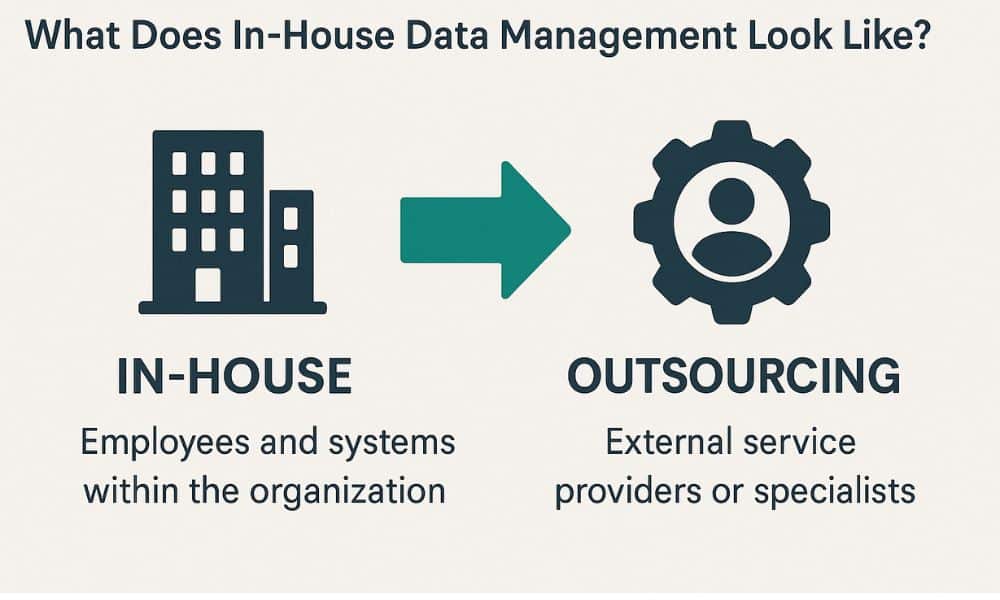
The term in-house data management describes an internal procedure whereby full-time or part-time staff handle data. From data input, cleansing, and validation to analytics and reporting, the internal data professionals painstakingly apply their knowledge to handle everything. This method of handling data has the significant advantage of giving you complete control over how information is managed and processed.
1. Pros of in-house data management
- Create complete management authority over data and its processes.
- Assure prompt teamwork and feedback at all times.
- Easy access to tools and systems to the company
- Easily incorporate data into internal teams’ workflows
2. Cons of in-house data management:
- Regularly needing to pay for recruiting and training
- It is nearly impossible to scale during periods of high demand.
- The rate of attrition is still high.
- The team’s use of multitasking or under staffing makes delays evident.
For those who need to manage extremely sensitive or private information, in-house operations make sense given the relevance. It is also advantageous for people who require regular departmental collaboration. However, its scalability is hampered by growing data volumes or complexity.
The Outsourcing Option: A Strategic Move
Delegating work to outside experts who specialise in high-quality data processing assistance, handling, input, cleansing, and other areas is known as outsourcing. For ongoing or one-time data projects, many organisations enter into contracts with other parties. This offer is a fraction of the price of properly keeping important documents.
In sectors including e-commerce, healthcare, banking, and logistics, this business support approach has grown incredibly popular. They gain from its price, quickness, and flexibility.
Benefits of Contracting Out Data Work
- Easy access to specialised skill sets without requiring a long-term dedication
- Economical or economical operational assistance
- 24/7 processing support that is independent of time zones worldwide
- Quick processing times for managing jobs involving large amounts of data
- Immediate scalability for work based on projects
Cons of Outsourcing Data Tasks:
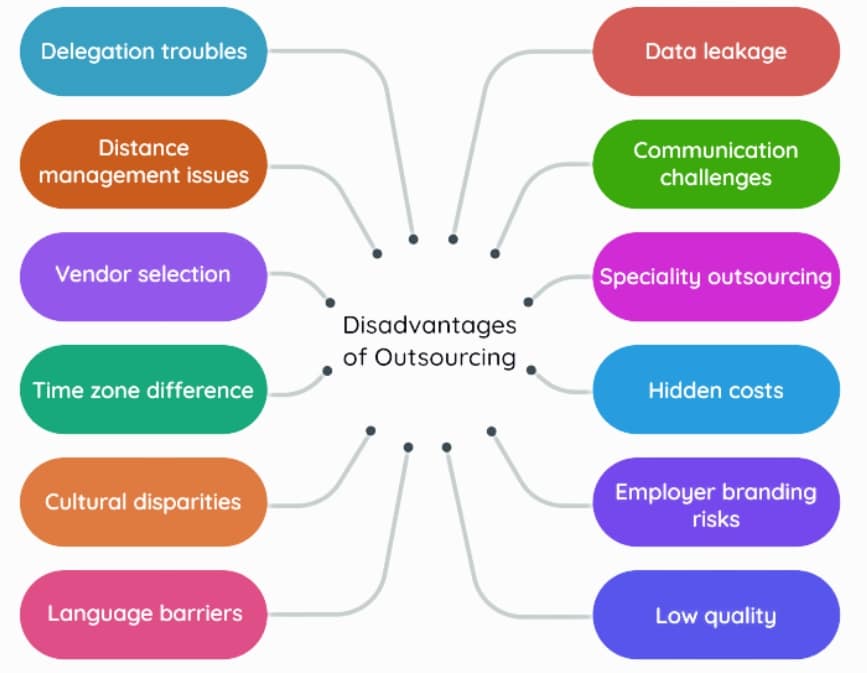
- Minimal control over staff and process
- Data security is at risk if low-tier vendors is hired
- Potential communication gaps because of offsite or remote setups
- Less reliability and low service consistency
For this reason, outsourcing necessitates a specialised partner capable of offering high-quality assistance with data processing. It can be ensured by learning about the experience, security procedures, and secure routes of communication of the potential partner.
Factors to Consider Before You Delegate
After learning the benefits and drawbacks of both internal teams and outsourcing data management support, let’s discuss how to assess your requirements, objectives, and available resources before choosing one of them:
1. Compliance and Data Sensitivity
In-house data management is the most effective way to handle highly confidential information, such as that pertaining to law, medicine, or finance, since it ensures that your private documents are secure and adhere to legal and regulatory requirements.
Additionally, if you decide to outsource, pick a partner who has earned certification under international standards like GDPR and ISO 27001. Sign the appropriate Service Level Agreement (SLA) and Non-Disclosure Agreement (NDA) in advance as well.
2. Frequency and Volume
High-volume data chores (such as processing invoices, updating catalogues, and entering surveys) should ideally be outsourced. It is possible to align certain organised and repetitive data operations that need less oversight. Time and hard-earned money are both saved.
3. Financial Limitations
Task delegation to an outside expert eases financial strain and makes it feasible for startups and small enterprises who can hardly afford to hire full-time data specialists on staff. By paying for what they require, this option presents a fantastic chance to boost their return on investment.
4. Speed and Reaction Time
As long as the quality is flawless, a quick turnaround is always welcomed. The in-house workforce may become distracted by multitasking and feel overworked during urgent deliveries. It is avoided by the outside assistance, which provides flexibility to fulfil deadlines.
5. Team Work and Expertise
Specialised skills may be lacking in internal teams. It is evident when tasks such as formatting, data mining, or validation are disrupted due to a lack of necessary skill sets. Professionals with training and expertise in managing various formats and platforms are needed for these duties.
Why Quality Matters in Outsourcing
In addition to its cost-effectiveness, outsourcing is becoming more and more popular due to its accuracy, consistency, and dependability. Consider the consequences of mistakes. Customer service, marketing initiatives, and sales projections will all suffer as a result.
For this reason, it is essential to include individuals that rigorously combine data processing and unassailable quality. Before the final delivery, these experts carefully prepare and adhere to stringent rules to validate entries and check quality at several stages.
Factors to Consider Before You Delegate
The signs that can help in selecting a reliable partner can be the following:
- SLA-driven turnaround commitments
- Transparent communication and reporting
- Secure data transfer systems
- Tailored services based on your domain or industry
The Hybrid Method: Combining the Best Features of Both
Nonetheless, there are two models to choose from. Additionally, some experts advise choosing a hybrid model rather than a particular one. It can be similar to outsourcing time-consuming activities to a knowledgeable company and protecting critical data internally. This approach leverages the speed and scalability of external partners while offering significant control over crucial procedures.
Take the example of a retail business. Internal alignment of feedback management is possible. Additionally, for a quicker turnaround and less work, outsource catalogue updates and product data entry.
Conclusion
Businesses change with time, which affects the amount and complexity of data. For prompt assistance, they must either expand their in-house data management teams or engage an outside partner. Despite the fact that each option has advantages and disadvantages of its own, astute companies choose a hybrid approach, combining the two based on cost and ease.