

RPA Transforming Business Operations has become a cornerstone of modern enterprise efficiency. In 2025, organizations are increasingly adopting Robotic Process Automation (RPA) to streamline workflows, reduce costs, and enhance scalability. This shift is not merely a technological upgrade but a strategic move towards intelligent automation.
As businesses face mounting pressure to remain competitive, RPA offers a solution that automates repetitive, rule-based tasks. This automation liberates human resources to focus on more complex and value-added activities. The integration of RPA into business operations is reshaping industries, from finance to healthcare, by improving accuracy, speed, and compliance.
How RPA Transforming Business Operations
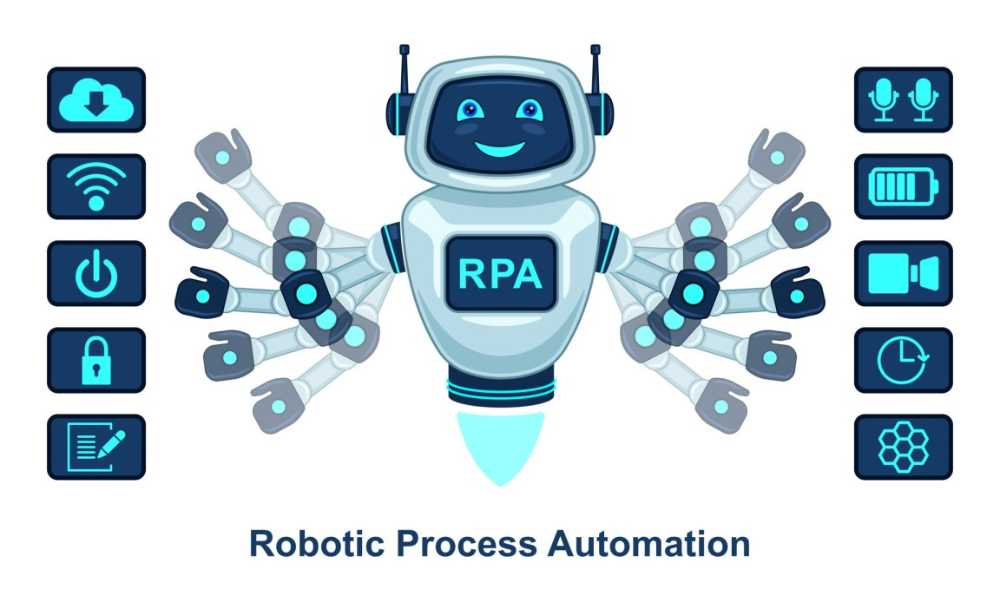
1. From Basic Automation to Intelligent Systems
Initially, RPA was employed to handle simple, repetitive tasks such as data entry and invoice processing. However, advancements in artificial intelligence (AI) and machine learning (ML) have propelled RPA into the realm of intelligent automation. Modern RPA systems now incorporate cognitive capabilities, enabling them to process unstructured data, make decisions, and adapt to changing conditions.
This evolution has expanded the scope of RPA, allowing businesses to automate more complex processes. For instance, in the financial sector, RPA is now used for fraud detection and compliance monitoring, tasks that require a higher level of decision-making and adaptability. According to a report by the Business Research Company, the global RPA market size is projected to grow from $7.94 billion in 2024 to $9.91 billion in 2025, reflecting a compound annual growth rate (CAGR) of 24.8%.
2. Integration with AI and Machine Learning
The synergy between RPA and AI/ML is unlocking new possibilities for business automation. AI-powered RPA bots can analyze large volumes of data, identify patterns, and make informed decisions without human intervention. This integration enhances the efficiency and effectiveness of automated processes.
For example, in customer service, AI-integrated RPA bots can understand natural language, interpret customer queries, and provide personalized responses. This not only improves customer satisfaction but also reduces the workload on human agents, allowing them to focus on more complex issues.
3. Cloud-Based RPA Solutions
Cloud computing has further accelerated the adoption of RPA by providing scalable and flexible solutions. Cloud-based RPA platforms eliminate the need for extensive on-premises infrastructure, reducing costs and simplifying deployment. These platforms offer real-time updates, enhanced security, and the ability to scale operations quickly to meet business demands.
According to a report by AquSag Technologies, over 60% of RPA deployments are expected to be cloud-native by 2025, enabling organizations to achieve greater agility and responsiveness .AquSag Technologies
Industry Applications of RPA
1. Financial Services
In the financial sector, RPA is transforming operations by automating tasks such as account reconciliation, loan processing, and regulatory compliance. This automation reduces errors, speeds up processes, and ensures adherence to regulatory requirements.
JPMorgan Chase, for instance, has integrated AI across its operations as part of an $18 billion technology investment in 2025. The bank has launched an in-house generative AI platform for over 200,000 employees, boosting productivity and reducing time spent on low-value tasks.
2. Healthcare
RPA is revolutionizing healthcare by automating administrative tasks such as patient onboarding, claims processing, and data entry. This allows healthcare providers to focus more on patient care and less on paperwork.
A leading eClinical firm used RPA to automate clinical protocol submissions to regulatory bodies, cutting processing time by 40%.
3. Retail and E-commerce
In retail and e-commerce, RPA is streamlining operations by automating inventory management, order processing, and customer service. This leads to faster delivery times, improved customer satisfaction, and reduced operational costs.
Luxury fashion retailers such as Harrods, LVMH, and Hugo Boss are heavily investing in smart warehousing technologies to enhance their supply chain operations and improve efficiency .
Benefits of RPA Transforming Business Operations

1. Increased Efficiency and Productivity
By automating routine tasks, RPA enables employees to focus on more strategic activities. This leads to increased productivity and faster decision-making.
2. Cost Reduction
RPA reduces the need for manual labor, leading to significant cost savings. Additionally, it minimizes errors and rework, further reducing operational costs.
3. Enhanced Accuracy and Compliance
RPA ensures consistent execution of tasks, reducing the risk of human error. It also helps organizations comply with regulatory requirements by maintaining accurate records and audit trails.
4. Scalability
RPA systems can be scaled up or down quickly to meet changing business demands, providing organizations with the flexibility to adapt to market conditions.
Challenges and Considerations
1. Implementation Complexity
Integrating RPA into existing systems can be complex and may require significant upfront investment. Organizations need to carefully plan and execute RPA initiatives to ensure successful implementation.
2. Change Management
Introducing RPA may face resistance from employees concerned about job displacement. Effective change management strategies are essential to address these concerns and ensure smooth adoption.
3. Security and Data Privacy
Automating processes that handle sensitive data requires robust security measures to protect against data breaches and ensure compliance with data privacy regulations.
Future Outlook
The future of RPA is promising, with continuous advancements in AI and machine learning enhancing its capabilities. Organizations that embrace RPA are well-positioned to achieve greater efficiency, agility, and competitiveness in the evolving business landscape.
As noted by Ashlar Global, organizations that integrate RPA into their operations will outperform their competitors in agility, efficiency, and customer satisfaction
Summary
RPA Transforming Business Operations is reshaping industries by automating routine tasks, enhancing efficiency, and enabling organizations to focus on strategic initiatives. With advancements in AI and machine learning, RPA is evolving into intelligent automation, offering even greater capabilities. As businesses continue to adopt RPA, they are poised to achieve significant improvements in productivity, cost savings, and customer satisfaction.