


In the modern digital ecosystem, your phone number has effectively become your universal ID card. You use it to log into your bank, recover your email, and even confirm your Uber ride. However, relying on a standard SIM card creates a massive security hole. To truly protect your identity, you must learn how to secure SMS verification workflows by decoupling them from your physical device.
Phone numbers were never intended to serve as identity documents. They are routed through legacy telecommunications protocols (SS7), which are notoriously insecure. When you hand over your personal number to every website that asks for it, you aren’t just verifying your humanity; you are creating a permanent link between your online activity and your physical location.
This guide explores why abandoning your personal SIM card in favor of virtual alternatives is the only way to stop SIM swappers and keep your data safe.
Part 1: Why You Need to Secure SMS Verification Immediately
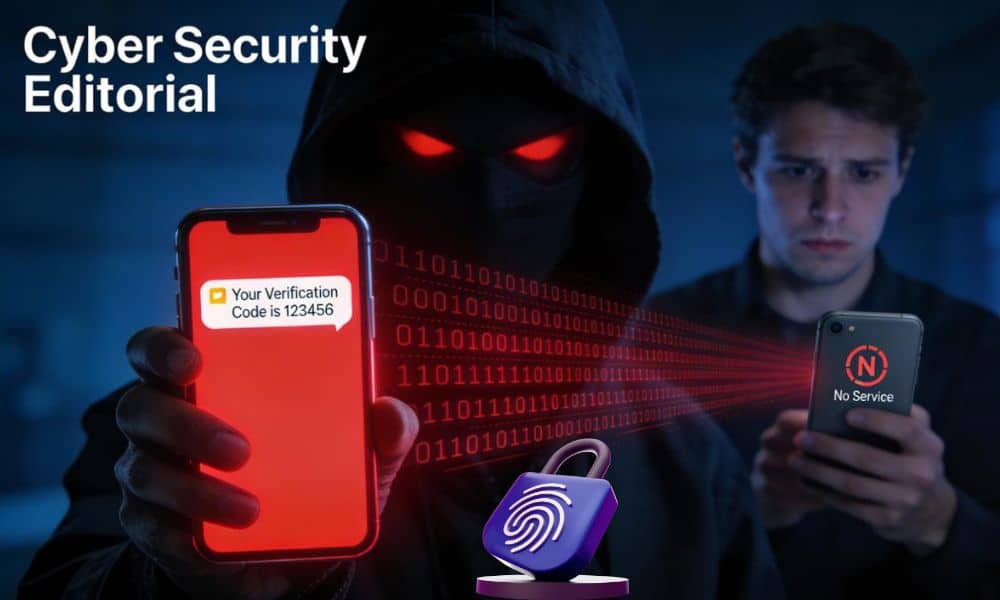
To understand the urgency, you first need to know how easy it is to hack a standard phone number. The biggest threat isn’t a complex codebreaker; it’s a simple social engineering trick called “SIM Swapping.”
A “SIM Swap” occurs when a hacker calls your mobile carrier (Verizon, T-Mobile, Vodafone, etc.) pretending to be you. They claim they lost their phone and ask to port “your” number to a new SIM card they control.
- The Result: Your phone goes dead. The hacker’s phone lights up.
- The Damage: They now receive all your 2FA codes. They can reset your email password, drain your crypto wallet, and lock you out of your bank account in minutes.
This happens because carrier support agents are human and fallible. If you rely on your primary SIM to secure SMS verification codes, you are trusting a minimum-wage support agent with your life savings.
The SS7 Vulnerability
Beyond social engineering, the network itself is flawed. The Signaling System No. 7 (SS7) protocol, which routes calls globally, lacks modern encryption. As noted by the Electronic Frontier Foundation (EFF), sophisticated attackers can intercept SMS messages in transit without ever touching your phone. This is why experts universally recommend moving away from carrier-based text messaging for sensitive security.
Part 2: How Virtual Numbers Help Secure SMS Verification
A virtual phone number is a telephone number that is not tied to a specific physical phone line or SIM card. Instead, it relies on the internet to route calls and texts. Using a virtual number is the single most effective way to secure SMS verification for three critical reasons.
1. Decoupling Identity from Device
When you use a virtual number, the 2FA code is sent to an app or web dashboard, not your physical SIM. Even if a hacker steals your iPhone, they cannot access your virtual number unless they also have the login credentials for that specific app. This adds a third layer of security (Knowledge + Possession + App Access).
2. The “Airlock” Strategy
Think of your virtual number as an “airlock” for your personal data. You should treat your real mobile number as a Tier 1 secret, only shared with family and close friends. For everything else—Facebook, Twitter, newsletters, and random app signups—use a virtual number.
If a database leak occurs at a significant social network (which happens often), hackers only get your virtual phone number. Your real number remains safe, and you can delete the virtual number and get a new one. This is the only way to truly secure SMS verification processes against mass data breaches.
3. Bypassing Geo-Restrictions
Many services enforce arbitrary border controls. A bank in the UK might demand a UK phone number, or a service in Japan might require a Japanese prefix. Roaming fees are expensive, and buying physical SIM cards for every country is impossible. A virtual number provider lets you rent a “+44” or “+81” number instantly, so you can secure SMS verification for international accounts without leaving your living room.
Part 3: Types of Numbers to Secure SMS Verification
Not all virtual numbers are created equal. To adequately protect your accounts, you must choose the right type of number for the job.
1. VoIP Numbers (Voice over IP)
These are the most common (e.g., Google Voice, Skype). They are cheap and easy to set up, making them ideal for low-security accounts such as newsletters or shopping sites. However, many banks and high-security apps (like WhatsApp or Tinder) block VoIP numbers to prevent spam.
2. Non-VoIP (Real SIM) Numbers
These numbers are hosted on physical SIM cards in a server farm, but you access them remotely. They look exactly like “real” mobile subscribers to the system and are rarely blocked. If you are trying to secure SMS verification for a high-value account (such as Coinbase or PayPal), you almost always need a non-VoIP number.
Part 4: A Step-by-Step Security Workflow
Here is how to implement this strategy today to harden your digital defenses.
Step 1: Audit Your Accounts
List every service that has your phone number. Categorize them into “Critical” (Banks, Email) and “Junk” (Social Media, Apps).
Step 2: Acquire a Virtual Number
Choose a reputable provider. Avoid “Free Receive SMS” sites—these are public and dangerous. Look for paid services that offer private, dedicated lines.
Step 3: Update Your Credentials
Log in to your “Junk” accounts and replace your real number with your new virtual number. This immediately reduces your attack surface.
Step 4: Enable App-Based 2FA Where Possible
While the goal is to secure SMS verification, the gold standard is actually App-Based Authentication (like Authy or Google Authenticator). If a service offers App 2FA, use it. If they only provide SMS (which many banks still do), use your Virtual Number.
For more on securing your high-value accounts, refer to our guide on protecting your Ring account, which details similar multi-factor strategies.
Part 5: The Future of Verification (Passkeys)
The industry is slowly moving away from passwords entirely. Technologies like Passkeys (FIDO2) allow you to log in using biometrics (FaceID) without sending any code over the airwaves.
However, adoption is slow. For the next 5-10 years, SMS will remain the default fallback for billions of users. This means the ability to secure SMS verification will remain a critical digital life skill for the foreseeable future.
FAQs
Q: Is it safe to use free virtual number sites?
A: No. Never use sites that list “Public SMS Numbers.” Anyone on the internet can see the messages sent to those numbers. If you use one to verify your PayPal account, a hacker watching that page can hijack your account in seconds. Only use paid, private numbers.
Q: Can I use a virtual number for WhatsApp?
A: Yes, but WhatsApp is aggressive about blocking VoIP numbers. You will likely need a “Non-VoIP” virtual number to register successfully.
Q: What happens if I stop paying for the number?
A: The provider will recycle the number and sell it to someone else. The new owner could potentially reset your passwords. To prevent this, only use “Burner” numbers for one-time verifications. For long-term accounts (like a bank), you must maintain the subscription to keep the number active.
Conclusion
Is privacy not a product you buy? It is a habit you build.
Relying on your personal SIM card for every login is a habit from 2010. In 2025, it is a liability. By adopting virtual numbers, you create a firewall between your physical life and your digital footprint. You gain the power to secure SMS verification flows, travel freely without border restrictions, and sleep better knowing your identity is safe from SIM swappers.
Don’t wait for a data breach to force your hand. Secure your text-to-speech and communication channels today before your data ends up on the dark web.