
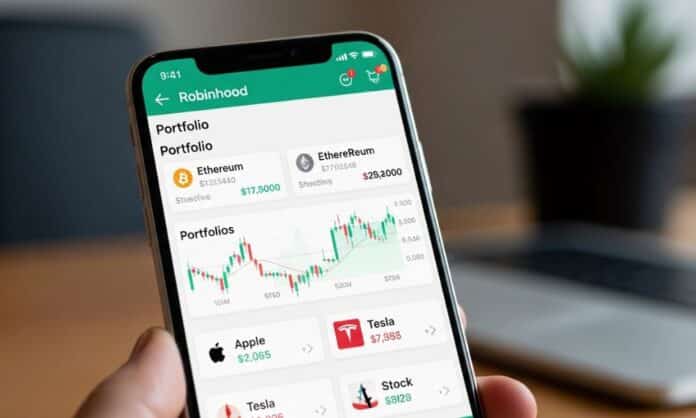

I remember clearly when Robinhood first announced the fusion of crypto with their stock app. The marketing pitch was seductive: “Zero fees!” “Trade Bitcoin right next to your Tesla stock!” “Investing for everyone!”
For a moment, it sounded perfect. The idea of having my entire financial life—stocks, ETFs, and now Bitcoin—in one sleek app was the dream. No more managing twelve different passwords or learning complex exchange interfaces.
But I’ve been in this game long enough to know that if something sounds too good to be true, it usually costs you in other ways. I moved $1,000 into Robinhood Crypto to test this “revolution.” I wanted to see if merging traditional finance with digital assets was actually seamless, or just a dangerous marketing gimmick for new investors.
Spoiler: The “Zero Fees” promise comes with an asterisk the size of a billboard. Here is my deep-dive trading analysis of the real costs I paid, the features I missed, and why I eventually moved my coins to cold storage.
The “Zero Fee” Myth: Doing the Math
Robinhood’s biggest selling point for the fusion of crypto is commission-free trading. But as any experienced trader knows, if the product is free, you are the product.
I didn’t just take their word for it. I ran a live side-by-side test with a professional exchange (Coinbase Pro/Advanced) to see what was really happening under the hood.
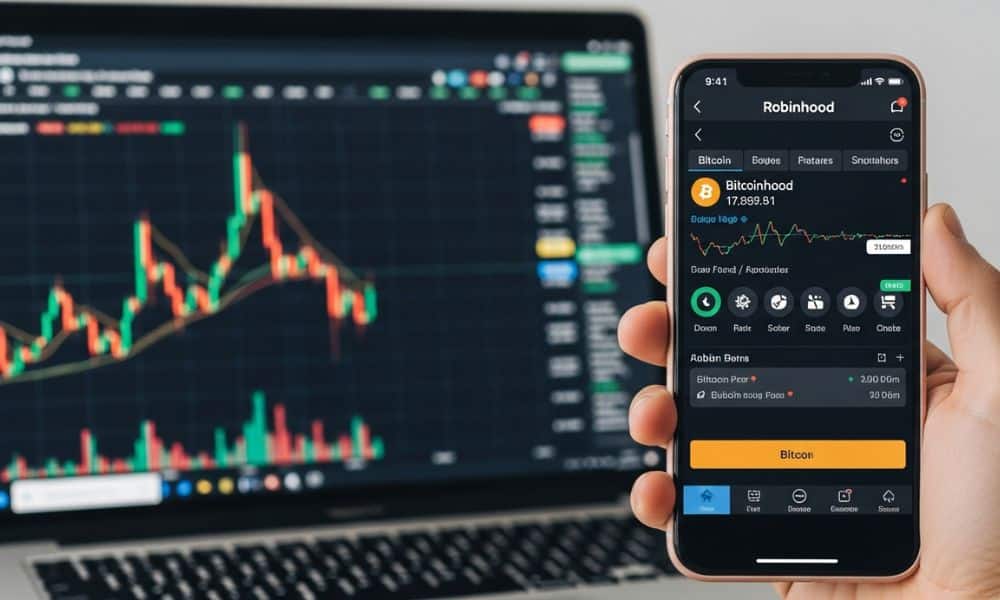
- The Test: Buy $100 worth of Bitcoin at the same moment.
- Market Price of Bitcoin: $95,000.
- My Buy Order on Robinhood: Executed at $95,350.
- My Buy Order on Exchange: Executed at $95,010 + $0.60 fee.
The Result: That $350 price difference isn’t a glitch. It is the trading spread. Robinhood (and many “free” brokers) makes money by selling your order flow to market makers or marking up the price slightly.
In my analysis, I found I was paying about 0.35% to 0.5% in hidden spreads on every trade.
- The Cost: On a $1,000 trade, you are losing $3.50 to $5.00 instantly.
- The Comparison: While this is competitively priced compared to Coinbase’s basic app (which charges huge fees), it is not free. You are paying for the convenience of the “fusion,” but don’t let them tell you it costs nothing.
The “Not Your Keys” Problem (My Transfer Test)
For years, the biggest criticism of Robinhood’s fusion of crypto strategy was custody. You could “buy” Bitcoin, but you couldn’t leave with it. You were betting on the price, not owning the asset.
I spent months feeling like my assets were trapped in a walled garden. I owned a number on a screen, not the actual coins. This violates the core ethos of crypto: “Not Your Keys, Not Your Coins.”
Recently, Robinhood finally added crypto wallet transfers. I decided to audit this feature to see if it was actually usable or just for show.
My Transfer Log:
- Initiation: I tried to send ETH to my Ledger hardware wallet.
- The Hoop Jumping: Before I could even click send, I had to go through a rigorous identity verification scan and enable 2FA. (Good for security, annoying for speed).
- The Speed: Once approved, the transfer took about 45 minutes to hit the blockchain.
- The Verdict: It works, but it feels reluctant. The daily withdrawal limits are strict ($5,000 for most users), and the interface gives you several “Are you sure?” warnings. It’s better than before, but it still feels like asking a traditional bank for permission to use your own money.
The “Outage” Factor: Reliability Under Fire
You cannot talk about Robinhood without addressing the elephant in the room: Uptime.
During the height of the Dogecoin mania (and the GameStop saga), I experienced this firsthand. The market was moving 20% in an hour. I tried to open the app to sell.
Result: “Server Error.”
Because Robinhood handles such massive volume from retail traders, their servers have a history of buckling exactly when you need them most—during high volatility.
- The Risk: If you are relying on this fusion of crypto app to day-trade or panic-sell during a crash, you are taking a massive risk.
- My Advice: Robinhood is fine for “Buy and Hold.” It is terrible for “Panic and Sell.”
Where the “Fusion” Actually Works: The Tax Benefit
Despite my harsh criticisms, there is one area where this mainstream finance integration absolutely shines, and it’s the reason I still keep a small balance on the app: Taxes.
If you have ever tried to calculate taxes across three different DeFi wallets, two exchanges, and a staking pool, you know the absolute nightmare of CSV exports and mismatched timestamps.
My Experience:
Because I held both my S&P 500 index funds and my casual crypto bag on Robinhood, tax season was incredibly dull—in a good way.
- Consolidation: I got one consolidated 1099 form.
- Simplicity: The Robinhood crypto fees and cost basis were already calculated for me.
- The Verdict: For the casual investor who just wants 5% exposure to Bitcoin without hiring a CPA, this convenience is unbeatable.
The “Gamification” Danger
The dark side of this fusion of crypto is the UI itself. Robinhood is famous for its confetti and bright colors, but in crypto, this is dangerous.
In my log, I noticed a behavioral pattern: I would check the app to see how my stable ETF portfolio was doing. While there, I’d see a bright green notification: “Dogecoin is up 15% today!”
Because the friction to buy is so low (no new login, no new deposit), I impulsively bought some.
By placing volatile, 24/7 assets right next to stable, 9-5 long-term investments, the UI encourages impulse trading. It blurs the line between “investing” and “gambling.” The UI uses clever design tactics—a classic lesson in crypto marketing—to keep you trading, because trading is how they make their money.
Final Verdict: Who is this for?
After two years of using this hybrid platform, my analysis leads to a split verdict.
- For the “Crypto Native” (HODLer): Avoid.
If you know what a “seed phrase” is, Robinhood is not for you. The spreads are too high, the custody is too restrictive, and the inability to interact with DeFi (like staking or NFTs) makes it a dead end. Use a dedicated exchange and cold storage. - For the “Casual Observer”: Acceptable.
If you are someone who just wants to throw $50 at Bitcoin for fun, or you want to “set it and forget it” alongside your stock portfolio, Robinhood’s fusion of crypto is the path of least resistance. It handles security, custody, and taxes for you.
My Final Move:
I pulled my Bitcoin off Robinhood and put it in cold storage. But I kept the app for my stocks. The fusion is a nice idea, but I prefer my volatile assets to be in my own hands, not in a broker’s “wallet.”