
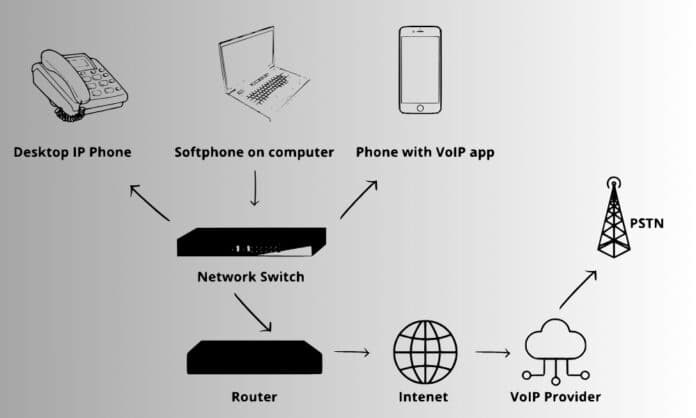

A VoIP Phone System, or Voice over Internet Protocol, allows voice communication over the internet rather than traditional phone lines. By converting voice signals into digital packets, the system uses the internet to transmit calls instead of relying on costly telephone networks. This technology enables businesses to save on long-distance charges and enjoy more flexible communication.
The VoIP Phone System enables various features that traditional landline systems do not support. These features range from video conferencing to voicemail-to-email services, which are vital for businesses aiming to streamline communication and reduce overhead costs. Over recent years, the adoption of VoIP has grown significantly as it offers seamless integration with digital tools and enhanced scalability for growing businesses.
How Does a VoIP Phone System Work?
A VoIP Phone System works by converting voice signals into digital data packets, which are transmitted over the internet. This data is sent to a server or recipient’s device where the signal is reassembled into voice communication. The process can occur in real-time, with almost no delay, depending on internet connection speed.
- Signal Conversion: Analog voice signals are transformed into digital data packets by the VoIP system.
- Data Transmission: The data packets are sent over the internet, typically via SIP (Session Initiation Protocol) or another VoIP protocol.
- Signal Reconstruction: The digital packets are reassembled and converted back into analog voice signals by the receiving system.
This process allows businesses to make voice calls without being tied to traditional telephony infrastructure. Employees can work from anywhere, using a wide range of devices to stay connected.
Core Features of a VoIP Phone System
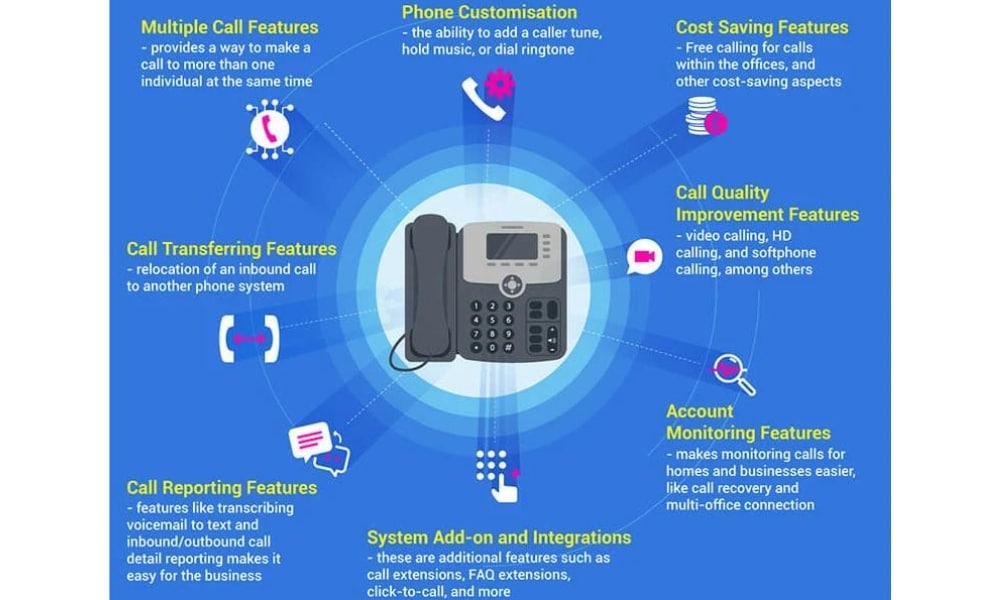
A VoIP Phone System offers businesses multiple features designed to optimize communication. These features ensure smooth, reliable interactions between teams, customers, and clients. Here’s a look at some key features businesses can leverage:
1. Call Forwarding and Voicemail to Email
VoIP Phone Systems offer advanced call forwarding capabilities, which ensure that you never miss an important call. Calls can be routed to mobile devices or other phone numbers if you’re unavailable at the office.
- Voicemail-to-email functionality also allows users to receive voicemail as email attachments. This feature enhances accessibility and helps businesses respond to customer inquiries promptly.
2. Integration with Mobile Devices
Mobile integration is another advantage of VoIP systems. With mobile apps, employees can make and receive calls from anywhere, enhancing flexibility. This makes the VoIP Phone System ideal for businesses with remote or hybrid working models.
- Staff members can stay connected with customers and colleagues, even when away from their desk.
3. Video Conferencing
VoIP systems facilitate video conferencing, enabling businesses to conduct virtual face-to-face meetings. This feature is particularly beneficial in today’s remote working environment, allowing teams and clients to collaborate effectively without being in the same location.
- Video conferencing capabilities allow you to host meetings, conduct interviews, and share presentations with ease.
4. Call Analytics and Reporting
VoIP Phone Systems often come equipped with call analytics and reporting features. These tools allow businesses to monitor call volume, track call duration, and assess employee performance.
- Access to real-time data helps management make informed decisions on improving operational efficiency.
5. Interactive Voice Response (IVR)
- Interactive Voice Response (IVR) is another feature of VoIP systems. IVR allows businesses to automate call routing, ensuring customers are directed to the right department or individual.
- Customers can interact with pre-recorded menus, ensuring their concerns are addressed swiftly, without human intervention.
Benefits of VoIP Phone System for Businesses
1. Cost Savings
One of the most significant benefits of using a VoIP Phone System is cost savings. Traditional phone systems, especially those involving international or long-distance calls, can incur high fees. VoIP systems operate over the internet, which significantly lowers the cost of calls, especially for businesses that make frequent international communications.
- By reducing long-distance charges and eliminating the need for separate phone lines, VoIP systems can drastically cut monthly communication expenses.
2. Scalability and Flexibility
VoIP systems are highly scalable, making them ideal for growing businesses. Adding new lines or extensions is simple and cost-effective. As businesses grow, their communication needs evolve, and VoIP can easily accommodate those changes.
- Flexibility is another advantage. VoIP allows businesses to scale up or down based on seasonal demands, providing an adaptable solution.
3. Enhanced Collaboration
VoIP systems improve collaboration among employees, whether they are in-office or remote. Features like video conferencing, file sharing, and team messaging enhance communication and collaboration in real-time. This helps teams stay connected and work efficiently from different locations.
- Collaborative tools such as shared calendars, task managers, and integrations with productivity software make VoIP a key player in modern businesses.
4. Improved Customer Service
By integrating VoIP with customer relationship management (CRM) systems, businesses can better serve their customers. VoIP systems can log calls, track customer interactions, and provide instant access to client information during calls, leading to improved customer service.
- Additionally, businesses can provide better support by offering multiple communication channels, such as voice, email, and chat, through a unified VoIP system.
VoIP Phone System: Trends and Future of Communication
As VoIP technology continues to evolve, businesses are set to benefit from enhanced features and innovations. In 2025, several key trends are expected to shape the VoIP landscape.
1. 5G and VoIP
The introduction of 5G will revolutionize VoIP communication. Faster internet speeds and lower latency will significantly improve call quality and reliability. This will allow businesses to take advantage of seamless communication and ultra-fast data transfer.
- VoIP Phone Systems will become even more efficient with the widespread rollout of 5G networks, offering high-quality calls and real-time video communication with no delays.
2. AI Integration in VoIP Systems
Artificial intelligence (AI) is being integrated into VoIP systems to improve efficiency and functionality. AI-driven features, such as chatbots, automated call routing, and predictive analytics, will enhance customer service and improve internal operations.
-
Businesses can rely on AI to reduce wait times, ensure efficient customer support, and analyze customer data for better decision-making.
3. Cloud-Based VoIP Solutions
Cloud-based VoIP systems are becoming more popular due to their flexibility and ease of management. These systems allow businesses to access their VoIP services from anywhere, as long as they have an internet connection. With cloud solutions, businesses no longer need to worry about maintaining hardware or servers, as the provider takes care of these aspects.
- Cloud-hosted VoIP services ensure that businesses can scale without major infrastructure investments.
How Companies Can Benefit from a VoIP Phone System
VoIP Phone Systems offer a host of benefits for businesses looking to modernize their communication systems. By leveraging VoIP, companies can streamline their operations, reduce communication costs, and enhance their customer service capabilities. Here’s how businesses can make the most of their VoIP investment:
- Cost Savings: By eliminating traditional phone lines and reducing international call rates, businesses save money on their phone bills.
- Scalability: VoIP systems allow businesses to add or remove phone lines easily, adapting to changing business needs.
- Improved Customer Service: Integration with CRM systems and call routing features help businesses respond to customer needs promptly.
- Enhanced Communication Tools: Features like voicemail-to-email, mobile apps, and video conferencing improve communication flexibility across teams.
Conclusion
The VoIP Phone System is a game-changer for businesses looking to improve communication while cutting costs. With advancements in AI, 5G, and cloud solutions, VoIP systems will continue to evolve, providing even more value to companies in the years to come. By adopting VoIP technology, businesses can enhance collaboration, improve customer service, and drive long-term growth.
Frequently Asked Questions (FAQs) About VoIP Phone Systems
1. What should I do if the call quality is poor on VoIP?
Many users report issues with call quality, often related to internet speed or network congestion. One user mentioned: “I’ve noticed poor call quality when the internet connection drops below 20Mbps.”
Solution: Ensure that your internet connection is stable and fast enough for VoIP services. Additionally, prioritize network traffic to prevent other activities from affecting call quality.
2. How do I set up a VoIP phone system at home?
A user on the Overclockers forum shared their setup experience: “I have been using HT801 for well over a year with an A&A service. It’s simple to set up, just plug it into the router.”
Solution: Most VoIP phone systems are plug-and-play. Ensure that your router is VoIP-compatible and follow the provider’s setup guide to connect your phone or system.
3. Is VoIP reliable for business calls?
Many users have shared that VoIP has been very reliable for business calls. One user stated: “We’ve been using Zoom Phone for nearly two years now, and it’s been exceptionally stable.”
Solution: VoIP reliability is usually excellent with good network infrastructure. However, issues may arise with lower-quality connections. Choosing a reputable provider ensures better service uptime.
4. How much money can I save by switching to VoIP?
Many users have found significant cost savings after switching to VoIP, especially for international calls. One user shared:
“I’ve switched completely to VOIP for international calls, and it has saved a lot of money over the years.”
Solution: VoIP is cost-effective, particularly for international calling. Many users have saved up to 50% on monthly phone bills compared to traditional services.
5. How do I integrate VoIP with my mobile phone?
VoIP systems can integrate seamlessly with mobile devices. One Reddit user shared their experience: “Zoom Phone integrates perfectly with mobile devices, which allows me to make calls wherever I go.”
Solution: Look for VoIP systems with mobile apps or integration features. Most modern VoIP providers offer mobile solutions to ensure you’re always connected, no matter where you are.
6. Does VoIP work during power outages?
A concern shared by many users revolves around power outages and VoIP reliability. One user pointed out: “VoIP will not work during power outages unless you have backup power for your router and modem.”
Solution: Ensure you have backup power, such as a UPS (Uninterruptible Power Supply), for your modem and router to keep VoIP running during outages.
7. Can VoIP be used internationally?
Users often ask if VoIP can replace traditional international calling. One user shared their experience: “I’ve used VoIP to call internationally for years, and the quality is great.”
Solution: VoIP is ideal for international calling and can significantly reduce long-distance charges. As long as both ends have a reliable internet connection, you can make international calls without issues.
Please Note: These FAQs highlight the common questions and challenges VoIP users face, as shared in real user experiences across forums. By addressing these concerns, businesses and individuals can make better-informed decisions when considering a VoIP Phone System for their communication needs.
Check out: Leave Traditional Phone Line & Enjoy Virtual Phone Number