

Recent advancements in technology allow us to capture sound in high quality through different types of microphones. Which microphone types should you use? Here’s a quick overview.
There are several types of technologies used in microphones these days. Each class has a specific purpose, such as podcast microphones, recording music, live performances, gaming, and many more. Built-in microphones are also ubiquitous in speakers, headsets, and webcams.
Considering the numerous options, choosing a suitable mic for a given task is crucial. Before you buy a mic, having a good grasp of the features and characteristics of each microphone type would be helpful.
What’s Inside a Microphone?
A microphone is a device that captures sound waves and converts them into electrical impulses. Though microphones run on different technologies, they all have the essential parts. The capsule or baffle collects the sound waves. The diaphragm (a thin membrane located inside the capsule) vibrates when it receives sound waves and converts them into electrical impulses.
The audio signals are then replicated through an audio interface or mixer for recording or amplified into sound waves through a speaker.
While there are countless microphone brands and models, microphones are classified into three primary types: condenser microphones, dynamic microphones, and ribbon microphones. Each type picks up and converts sounds into electrical signals in a different way. Microphones have their unique strengths and sounds. When used along with the right instrument, it can capture sound with laser-point clarity. On the other hand, if misused, it can sound terrible.
The best microphone type depends on the intended audio source, such as your voice, ambient noise, or a musical instrument, while minimizing unwanted nearby sound.
For example, if you produce podcasts in a studio, the DPA Condenser Microphones features would make it the best choice. If you perform live, such as in a band, a dynamic microphone is a smart pick. So, what can each microphone do?
Three Main Microphone Types
Dynamic Microphone
The most common type of microphone you can find in a music store. The dynamic microphone is ideal for voice, musical instruments, and drums. Preferred by live performers, the dynamic mic is known for its affordability and durability. It can withstand high levels of sound and noise before signal distortion becomes a problem. This variety of mic is often equipped with a high-pass filter to minimize sub-bass sound waves.
The dynamic microphone uses a relatively simple technology. It comes with a fixed magnet, often made of neodymium, attached at the rear of the diaphragm. As sound waves hit the diaphragm, it moves the voice coil back and forth. This movement creates a minute voltage signal converted into an electrical signal and projected through the amplifier.
Condenser Microphone
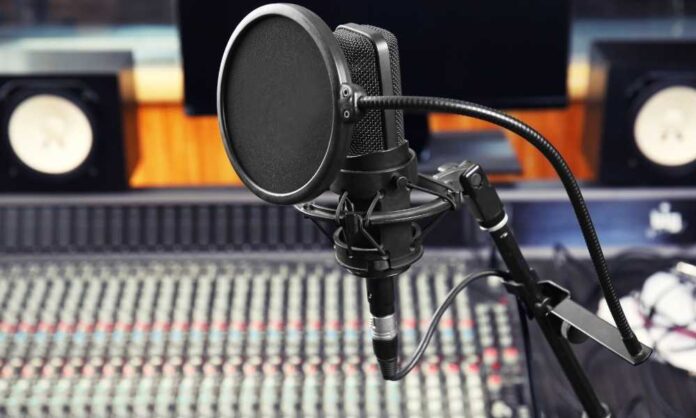
The condenser mic is ideal for capturing nuanced sounds like wind and string instruments in studio set-ups. Since this mic type is more delicate, so it is perfect in an enclosed, subdued setting. Condenser mic requires external power, such as a preamp or a phantom force. A pop filter and shock mount protect the condenser microphone’s sensitive internal parts. There are also shotgun condenser mics used outdoors. Usually, this mic type is used in movie productions to capture all dialogue.
Unlike dynamic mic, condenser microphone uses capacitor plates that are continuously charged by an external power source. Instead of a diaphragm, a malleable material comprises the front plate. Sound waves cause the front plate to vibrate and change the capacitance between the two plates, and these fluctuations convert into an electrical signal.
Ribbon Microphone
If you intend to use a microphone for voice recording, then this is the best pick. The ribbon mic has been around since the early ‘20s and is less common these days. It has a higher resonant frequency compared to a diaphragm-type mic. The ribbon mic picks up audio waves in a bi-directional polar pattern, thus capturing a fuller sound.
Ribbon mics are equipped with a thin metal strip (usually made of aluminum) suspended in a strong magnetic field. As sound waves hit, the ribbon vibrates between said poles and creating an electrical impulse. The ribbon works as both the diaphragm and the transducer element. This characteristic gives the ribbon mic the same sensitivity and transient response level as a condenser mic except for its unique, lower output. Ribbon mic is perfect for accurately picking up high-frequency sounds.
Final Thoughts
All said, you’re probably looking for a mic that will produce the sound that you like – and it’s all about your preferences. An excellent way to compare different microphone types is to conduct a controlled test and record the same sounds in a controlled environment. This test will help you evaluate the best-suited type depending on your use.
Check out: WIFI or Bluetooth Headphones: Which One Is Better?