


Every day, countless businesses and individuals transmit documents via fax. Whether sharing contracts, medical records, tax forms, or financial statements, the information being faxed is often sensitive. This raises a critical question: How does e-fax security compare to traditional methods? Understanding the security of e-faxing is essential for organizations handling confidential data.
The short answer is clear: security of e-faxing can be highly secure when done correctly. Especially with modern e-faxing platforms, understanding the right tools matters for protecting personal data. Today, many organizations switch to e-faxing because it combines the convenience of email with the security of traditional faxing—when proper protocols are followed. But before diving deeper, let’s explore why e-fax security matters and how it compares to other transmission methods, such as email.
Why Security of E-Faxing Matters More Than Ever
Traditional fax machines have a fundamental vulnerability: hard copies sit unprotected on desks and in bins. Documents can be lost, stolen, or improperly discarded by anyone with office access. Your conventional fax machine may resist hacking, but it lacks encryption, audit trails, and access controls that make modern e-faxing fundamentally different.
E-faxing changes this equation entirely. Digital transmission means documents never sit printed on office floors. Instead, they travel through secure, encrypted channels that only authorized recipients can access. Organizations handling Protected Health Information (PHI), financial data, or legal documents now have a more reliable protection method.
The stakes are high. A single misfaxed document containing patient information could trigger HIPAA violations, hefty fines, and damaged client relationships. Security of e-faxing directly addresses these risks with built-in safeguards that traditional methods cannot match.
How Security of E-Faxing Works: The Technical Foundation
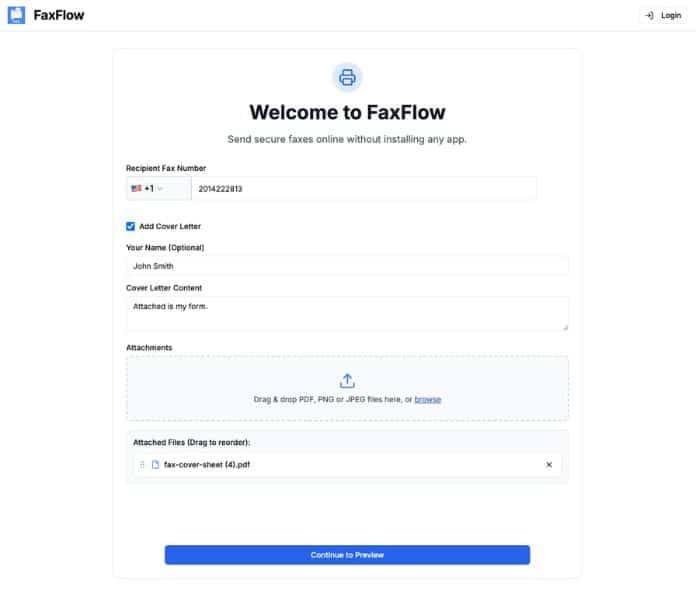
Understanding e-fax security requires understanding how modern platforms protect your data. Most reputable e-fax services use end-to-end encryption, which keeps documents secure from sender to recipient. This military-grade protection differs fundamentally from older approaches.
Encryption is the backbone of e-fax security. Most platforms deploy 256-bit AES encryption, the same standard used by government agencies and financial institutions. When you send an e-fax, the document gets scrambled into unreadable code. Only intended recipients with proper credentials can decode it. This happens automatically—no complicated steps needed.
Transport Layer Security (TLS) 1.2 adds another protection layer during transmission. Think of it as a secure tunnel for your data as it crosses the internet. Even if someone intercepts your fax transmission, they see only encrypted gibberish, not your actual documents.
But encryption during transit is just part of the security of e-faxing. Modern platforms also protect data at rest, while stored on company servers. Documents remain encrypted in storage until someone requests them. Access controls ensure only authorized personnel can retrieve specific files.
Key Features That Define the Security of E-Faxing
Reputable e-faxing platforms share standard security features worth understanding:
Multi-Factor Authentication (MFA) adds a critical barrier against unauthorized access. Instead of just entering a password, users receive a random verification code via email or SMS. Only users who provide both the password and the code can log in. This stops hackers even if they somehow obtain your password.
Audit logs and delivery confirmations create a complete record of every transmission. The system automatically tracks who sent what, when it was sent, and when recipients opened documents. This transparent trail proves invaluable for compliance reporting and resolving disputes about whether documents were actually received.
Secure file storage means documents remain protected both during transmission and at rest. Most enterprise-grade platforms delete files automatically after a set period, reducing exposure risk over time. Organizations can set their own retention policies in line with regulatory requirements.
User authentication protocols verify identity before granting access to sensitive documents. Combined with encryption, this creates multiple security layers that must be breached for someone to access data.
Security of E-Faxing vs. Email: Why E-Faxing Wins
Email seems convenient, but it introduces serious security vulnerabilities. Emails travel through multiple servers as they cross the internet. Each server represents a potential interception point. Email inboxes also lack the legal protections that faxing provides.
Most email systems lack encryption by default. Users must enable it manually—and most don’t. This means sensitive information travels in plain text across networks where unauthorized parties could capture it. Email also lacks delivery confirmation, so senders never truly know if documents reached intended recipients or were misdirected.
Security of e-faxing solves these problems. Encryption happens automatically on every transmission—no user configuration required. Delivery confirmation proves receipt without question. Legal protections are stronger for faxed signatures than email-based ones. Emails are also more susceptible to phishing attacks that trick recipients into revealing credentials or downloading malware.
Healthcare organizations especially recognize these advantages. HIPAA compliance is far simpler with e-faxing than with email. The regulation itself treats faxed communication as inherently more secure.
Regulatory Compliance: Security of E-Faxing Meets Industry Standards
Organizations handling sensitive data must comply with strict regulations. Security of e-faxing directly supports compliance with multiple standards simultaneously.
HIPAA compliance is perhaps the most critical for healthcare organizations. E-faxing platforms like eFax Protect and eFax Corporate achieve HIPAA compliance by implementing AES 256-bit encryption, comprehensive digital tracking, audit trails, and secure storage. Providers can enter Business Associate Agreements (BAAs) with customers, creating legal accountability for data protection.
But compliance extends beyond healthcare. The finance and legal sectors must comply with the GLBA (Gramm-Leach-Bliley Act) and SOX (Sarbanes-Oxley Act) requirements. E-faxing platforms that support these standards ensure organizations meet regulatory obligations automatically.
The GDPR (General Data Protection Regulation) applies to organizations that handle European customer data. Security of e-faxing platforms, encrypting data, and offering audit trails helps companies demonstrate GDPR compliance to regulators. PCI DSS certification ensures that payment card data receives proper protection during transmission.
The key insight: reputable e-faxing providers build compliance directly into their infrastructure. Organizations don’t need to add complex security layers themselves.
Integration With Existing Business Systems
Modern e-faxing doesn’t require abandoning current workflows. Many platforms offer API integration with EHR/EMR systems, allowing healthcare providers to send and receive secure faxes directly from patient records. This seamless integration maintains the security of e-faxing while improving operational efficiency.
Developers receive extensive documentation and customer support for API integration. This allows healthcare organizations to incorporate faxing capabilities without starting from scratch. The API itself meets strict security requirements, ensuring patient information remains protected during transmission.
Integration benefits extend across industries. Legal firms can fax documents directly from case management systems. Financial institutions can automate regulatory filings. E-faxing becomes part of the workflow rather than a separate, clunky process.
Real-World Security Concerns and Solutions
Despite strong security features, questions remain about specific scenarios. What happens when you send an e-fax to a traditional fax machine? The e-faxing system encrypts data during transmission to your platform. Once transmitted to a legacy fax machine over phone lines, encryption is no longer in effect.
This represents a fundamental limitation. Organizations sending sensitive data to recipients without modern e-faxing systems cannot guarantee complete end-to-end encryption. However, they still benefit from protected transmission up to the final destination.
The solution is encouraging recipients to upgrade their faxing infrastructure. When both sender and recipient use modern e-faxing platforms, data remains encrypted throughout the entire journey. Documents never traverse the public telephone network, where they’re vulnerable to interception.
For highly confidential information, organizations can add additional layers of protection. Encrypt documents using additional software before faxing. Use complex cover sheets that don’t reveal sensitive details. Coordinate passwords through separate channels. These approaches work with any e-faxing platform.
Best Practices for Implementing the Security of E-Faxing
Choosing a reliable provider is your first critical decision. Evaluate encryption protocols, data center security measures, and regulatory compliance certifications. Look for SOC 2 certification and HIPAA compliance if handling protected health information.
Assign clear compliance responsibilities within your organization. The fax provider secures its infrastructure, but your organization is responsible for data protection. Configure the platform correctly in accordance with your regulatory requirements.
Train employees on proper e-faxing usage. They should understand why encryption matters and how to identify legitimate fax requests. A well-trained staff becomes your strongest security layer, preventing social engineering attacks that bypass technical safeguards.
Implement strong password policies for all e-faxing accounts. Require multi-factor authentication for all users accessing sensitive information. Monitor audit logs regularly to detect suspicious activity. Keep software and security protocols up to date as vendors release updates.
Document your e-faxing procedures in writing. Create policies specifying who can send sensitive data, what information requires encryption, and how to handle failed transmissions. Documentation becomes critical evidence if regulators audit your compliance practices.
The Future of Security of E-Faxing
E-faxing security continues evolving. Providers increasingly offer additional features beyond basic encryption. Blockchain technology may eventually verify document authenticity and transmission integrity. Artificial intelligence can automatically detect suspicious access patterns.
However, the core principle remains unchanged: security of e-faxing depends on encryption, authentication, and audit trails. These fundamentals protect data far better than traditional methods or email alternatives.
Organizations that haven’t yet adopted e-faxing should recognize the competitive advantage it offers. Modern e-faxing reduces compliance costs, prevents data breaches, improves efficiency, and builds client trust. The technology is mature, affordable, and supported by major vendors across industries.
Conclusion: Making the Right Choice for Security of E-Faxing
E-faxing is the most secure method for transmitting sensitive documents in 2025. Encryption, authentication, and audit trails create multiple layers of protection that traditional faxing cannot match. Email pales in comparison for regulatory compliance and data protection.
Organizations handling healthcare data, financial records, or legal documents should prioritize e-faxing adoption. The security benefits far outweigh the minimal implementation effort. Training your team on proper usage ensures you fully realize these benefits.
Yes—secure e-faxing is one of the safest ways to transmit personal and business information. With the right platform and proper protocols, e-faxing security protects your organization’s most valuable assets while automatically maintaining regulatory compliance. The question isn’t whether to adopt e-faxing, but which platform best fits your specific needs.