


If you’re staring at a Disney Plus 8-digit code on your TV, wondering why this process seems complicated, you’re not alone. After activating it on several devices, I can explain what’s behind the scenes—and why it’s actually more secure. The 8-digit code simplifies the login process.
Understanding the Disney Plus 8-Digit Code
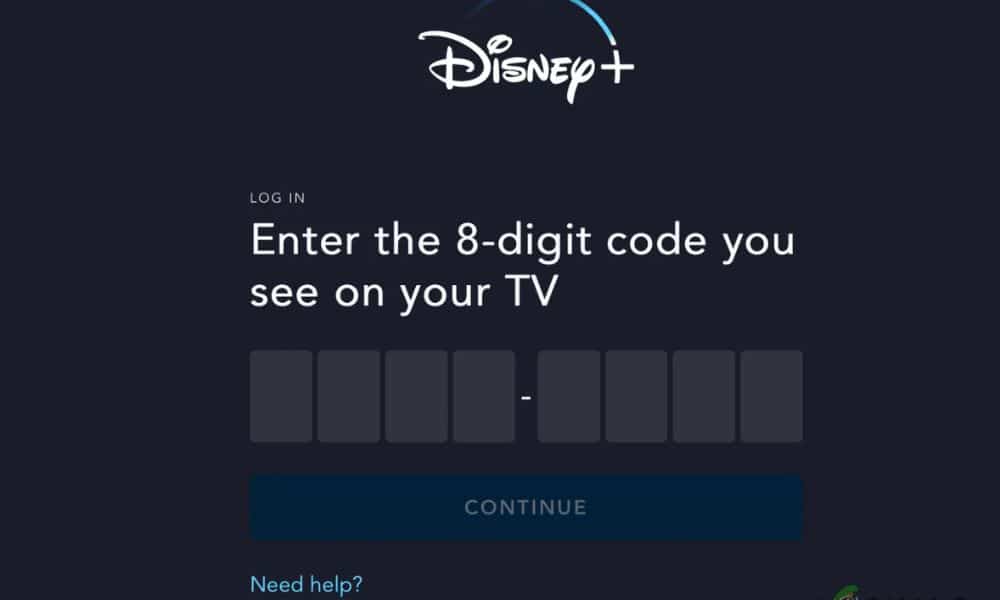
When you open Disney Plus on your smart TV and see that 8-digit code pop up, your device just initiated an OAuth 2.0 Device Authorisation Grant—a standardised security protocol from the Internet Engineering Task Force (IETF RFC 8628). The code your TV displays isn’t random. It’s a cryptographic identifier that links your TV to Disney’s authentication servers.
Here’s what’s actually happening: Your TV generated a unique device code (invisible to you) and a user code (the 8-digit number displayed). These codes communicate with each other through Disney’s authorisation servers. The TV device polls Disney’s servers approximately every 3-5 seconds, asking, “Has the user authorised me yet?” Meanwhile, that 8-digit code lets you complete authentication on a secondary device—your phone or computer.
The 8-digit code is essential for ensuring your security while using Disney Plus.
This separation of concerns is intentional. Your TV isn’t accepting your password. It’s a terrible place to type credentials. Remote controls are slow. Bystanders can see what you’re typing. If that TV gets compromised by malware, your password could get stolen. The 8-digit code system completely avoids this problem.
Why the 10-15 Minute Expiration Window Matters
The code expires in 10-15 minutes—not because Disney’s being cruel, but because security design demands time-limited access tokens. This window serves a specific purpose: if someone steals your TV remote and tries to activate your device without permission, they’re racing a timer.
Once that timer expires, the code becomes completely useless. The device code stored on Disney’s servers no longer validates anything. You can’t brute-force it. You can’t try variations. The code is dead.
This is why the system throttles attempts. After three incorrect code entries, the system forces you to generate a new code on your TV. This prevents attackers from trying thousands of combinations in rapid succession.
Where Most Activations Actually Fail
I’ve activated Disney+ on Roku, Amazon Fire TV Stick, PlayStation 5, and multiple smart TVs. Failures rarely happen because of the code system itself. They happen because of peripheral issues:
Network interruption during token exchange. Your TV’s Wi-Fi drops right when Disney’s servers try to hand your device the authorisation token. The system doesn’t gracefully recover. It just stops working. You restart and start over.
Browser delays. You navigate to disneyplus.com, but the verification endpoint takes 6+ seconds to respond. You’re typing the code, the timer’s counting down, and suddenly you get “Code Expired.” The browser load time consumed your activation window.
Account authentication state. You visit disneyplus.com expecting to enter the code immediately. But you’re logged out. The system forces you through a login screen first. That adds 30-60 seconds—time you don’t have on the countdown timer.
These aren’t design flaws in the 8-digit code system. They are friction points in the user experience. According to security expert Stephan O’Connor, “Your password never travels across your home network to your TV. You prove you own the account on a device you trust (your phone or computer), and your TV just receives an authorisation token afterwards. The password stays safe.
It’s important to understand that the 8-digit code system enhances the safety of your data.
The TV stays secure.” The architecture is sound. The execution has room for improvement.
The Real Security Advantage Nobody Discusses
Direct password entry on smart TVs exposes you to credential reuse attacks. Users typically reuse the same password across multiple services. Compromising your TV password means someone has the same password for Netflix, Amazon, Gmail, and everything else.
The 8-digit code system completely breaks this chain. Stealing the code from your TV gives an attacker nothing. They’d still need:
- Your Disney Plus account email address.
- Your account password.
- Physical access to your TV is required to capture the code.
- Successfully enter the code before expiration.
- Beat rate limiting after three failed attempts.
That’s multiple barriers. Each one independently stops most attacks.
The OAuth 2.0 Device Flow that Disney implements isn’t proprietary. Netflix, Amazon Prime Video, and most streaming platforms use the same approach. The industry converged on this because direct password entry on constrained devices is demonstrably less secure.
What Actually Works (From Hard Experience)
Pre-load your browser before touching the TV. Open disneyplus.com on your phone or computer, log in, and have the code input field sitting there. This eliminates waiting for the browser to load during the critical activation window.
Verify your network connection. Wired Ethernet is better than Wi-Fi if your TV supports it. Network interruptions during token exchange are the single biggest failure point.
Don’t delay. The 10-15 minute window isn’t a suggestion. Start entering the code immediately after your TV displays it.
The Bottom Line
Disney’s 8-digit code system is technically sophisticated and measurably more secure than alternatives. The frustration you experience isn’t because the system is broken—it’s because browser load times, network latency, and account state checks create friction around the edges of a fundamentally solid design. The architecture works. The user experience needs refinement. But the security? That part is exactly what you want.
Ultimately, the 8-digit code provides a robust layer of security.